Skip to content
Sunshine State Junk Removal

Demolition services

Interior Demolition in Broward County, FL

Interior demolition means tearing out the parts of a home or business you're replacing, like drywall, flooring, cabinets, fixtures or a whole room down to the studs, while protecting what stays. Sunshine State Junk Removal does the tear-out, hauls the debris away and sweeps up so your contractor or installer can start. Text photos to (954) 247-1399 for a quote.

  • 5.0 · 165+ reviews
  • Family- & veteran-owned
  • Haul-off included
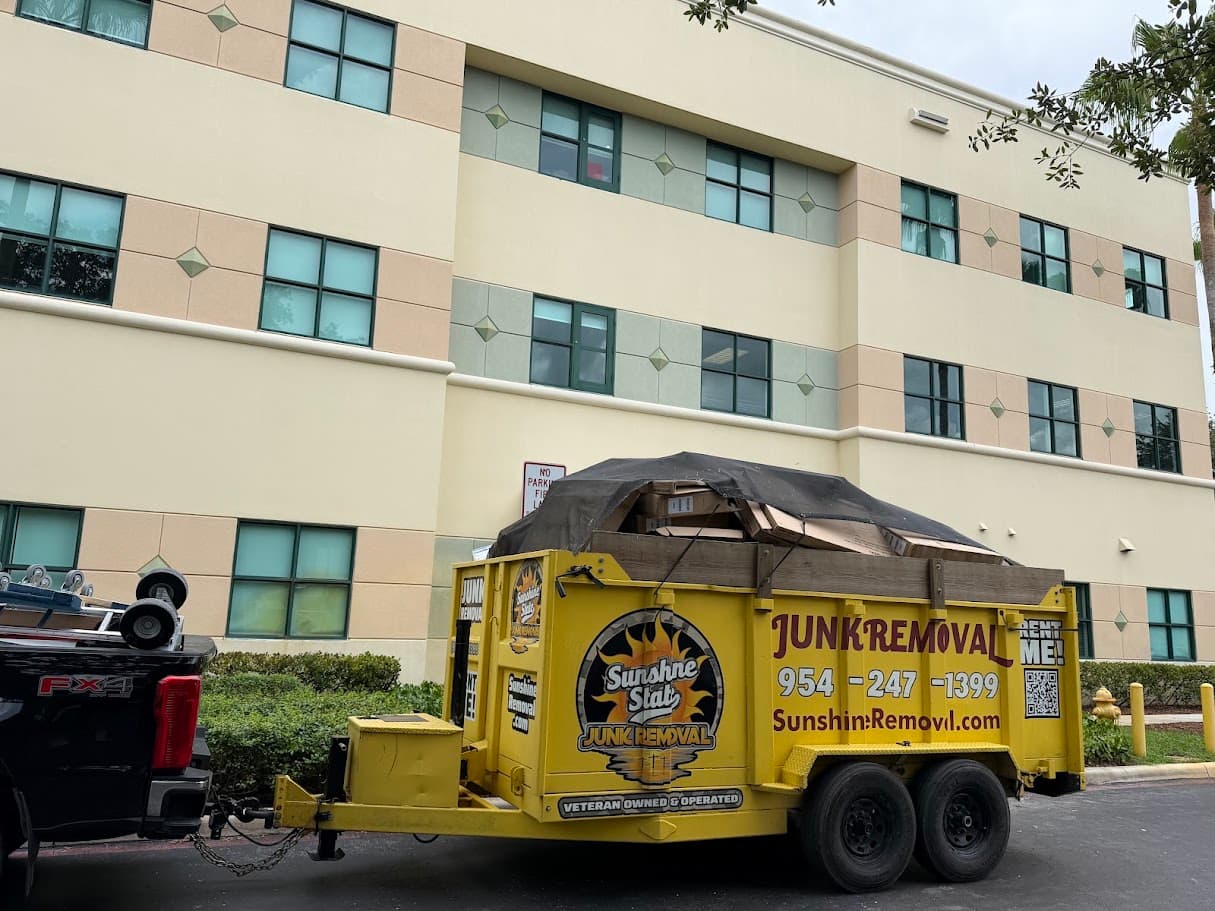
Yellow dump trailer loaded with tarped cardboard boxes outside a three-story building

What's included

  • Removing drywall, paneling, trim and ceilings in the agreed areas
  • Pulling up carpet, tile, laminate and wood flooring
  • Taking out cabinets, countertops, vanities and fixtures
  • Protecting floors, walls and rooms that are staying
  • Loading all debris and hauling it to approved disposal and recycling facilities
  • Sweeping up and leaving the space ready for the next trade

What you handle before we start

  • Have water, electric and gas to the work area shut off and disconnected by the appropriate party (your utility provider, plumber or electrician)
  • Clear out personal belongings, furniture and valuables from the rooms being demolished
  • Confirm whether a permit is needed — check with your city's building department
  • Get HOA or condo association approval for work hours, elevator use and debris removal if your community requires it
  • Tell us which walls, if any, are load-bearing or have been flagged by your contractor or engineer

How it works

How a interior demolition job runs

  1. Step 1

    Photos or walkthrough

    Send photos of each room, or book a walkthrough, and mark exactly what's coming out.

  2. Step 2

    Scope and quote

    We agree in writing on what gets removed, what stays, and what you handle before day one.

  3. Step 3

    Protect and tear out

    We cover what's staying, then remove drywall, flooring, cabinets and fixtures in the agreed areas.

  4. Step 4

    Load and haul

    Debris goes out as we work and is hauled to approved disposal and recycling facilities.

  5. Step 5

    Sweep-up

    We sweep the space and leave it ready for framing, plumbing, electrical or your installer.

Pricing:every demolition job is quoted on its own scope. Text photos of the area (or book a walkthrough) and we'll send a quote.

What gets removed in interior demolition, and what stays?

You decide the line. Interior demolition can be as small as one wall of drywall or as large as taking a whole floor down to the studs. Before any work starts, we agree on exactly what comes out and what stays, so there are no surprises when you walk back in.

Things commonly removed:

  • Drywall, plaster, paneling and drop ceilings
  • Carpet, pad, tile, laminate and wood flooring
  • Kitchen and bathroom cabinets, countertops and vanities
  • Trim, baseboards, interior doors and closet systems
  • Non-structural partition walls your contractor has cleared for removal

Things that usually stay unless you tell us otherwise: load-bearing walls, plumbing and electrical lines, HVAC equipment and ductwork, windows and exterior doors, and anything you've marked to keep. If you're reusing cabinets, doors or fixtures, tell us up front and we'll take them out carefully and set them aside instead of breaking them down.

Structural changes, like removing a load-bearing wall, need to be planned by your contractor or engineer. Check with your city's building department about permit requirements before that kind of work starts.
What affects the scope of an interior demolition job?

Two rooms that look the same in photos can be very different jobs. The things that change the scope most are:

  • How much material comes out. Ceilings and walls together produce far more debris than flooring alone.
  • What the material is. Tile set in mortar, plaster and old layered flooring take more time and weigh more than drywall and carpet.
  • Access. Stairs, elevators, long hallways and tight condo rules all add time to carrying debris out.
  • What has to be protected. Finished floors, cabinets you're keeping and occupied rooms next door need covering before work starts.
  • Salvage. Removing items carefully for reuse takes longer than tearing them out.

The fastest way to get an accurate quote is to send photos of every room involved, including the floors and ceilings, and a short note about what's staying. For larger jobs, a walkthrough lets us see access and conditions in person.

If you are only replacing part of a room, say so. Cutting drywall to a clean line for a patch takes more care than clearing a whole wall.

What should you know before interior demolition starts?

A little preparation keeps the job safe and on schedule. Utilities to the work area need to be shut off and disconnected by the appropriate party before demolition — that's your utility provider, plumber or electrician, not the demolition crew. Clear personal items out of the rooms, and let neighbors or your HOA know about work hours if your community requires it.

Some materials can't go in with ordinary debris. We don't accept or haul asbestos, chemicals, paints or other hazardous materials. If you suspect something in the space contains asbestos, have it tested by a qualified professional before demolition begins. The Florida Department of Environmental Protection administers the federal asbestos rules for demolitions and renovations in Florida, and its page explains the notification requirements and which local compliance office to contact.

If anything unexpected turns up once walls or floors are open, such as water damage, mold or wiring you weren't expecting, we stop and talk to you before going further.

Dumpster sizes

Trailer sizes that fit this debris

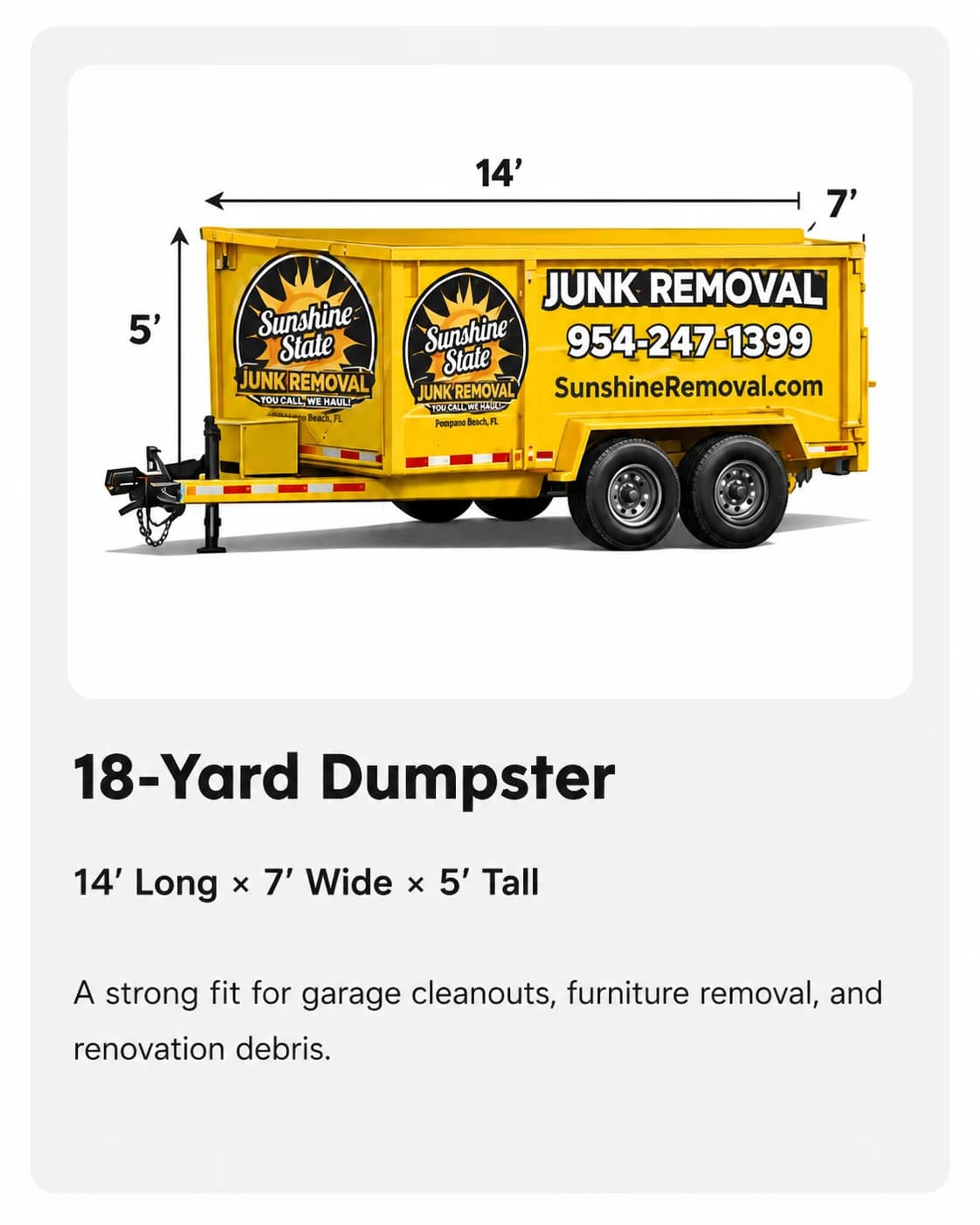
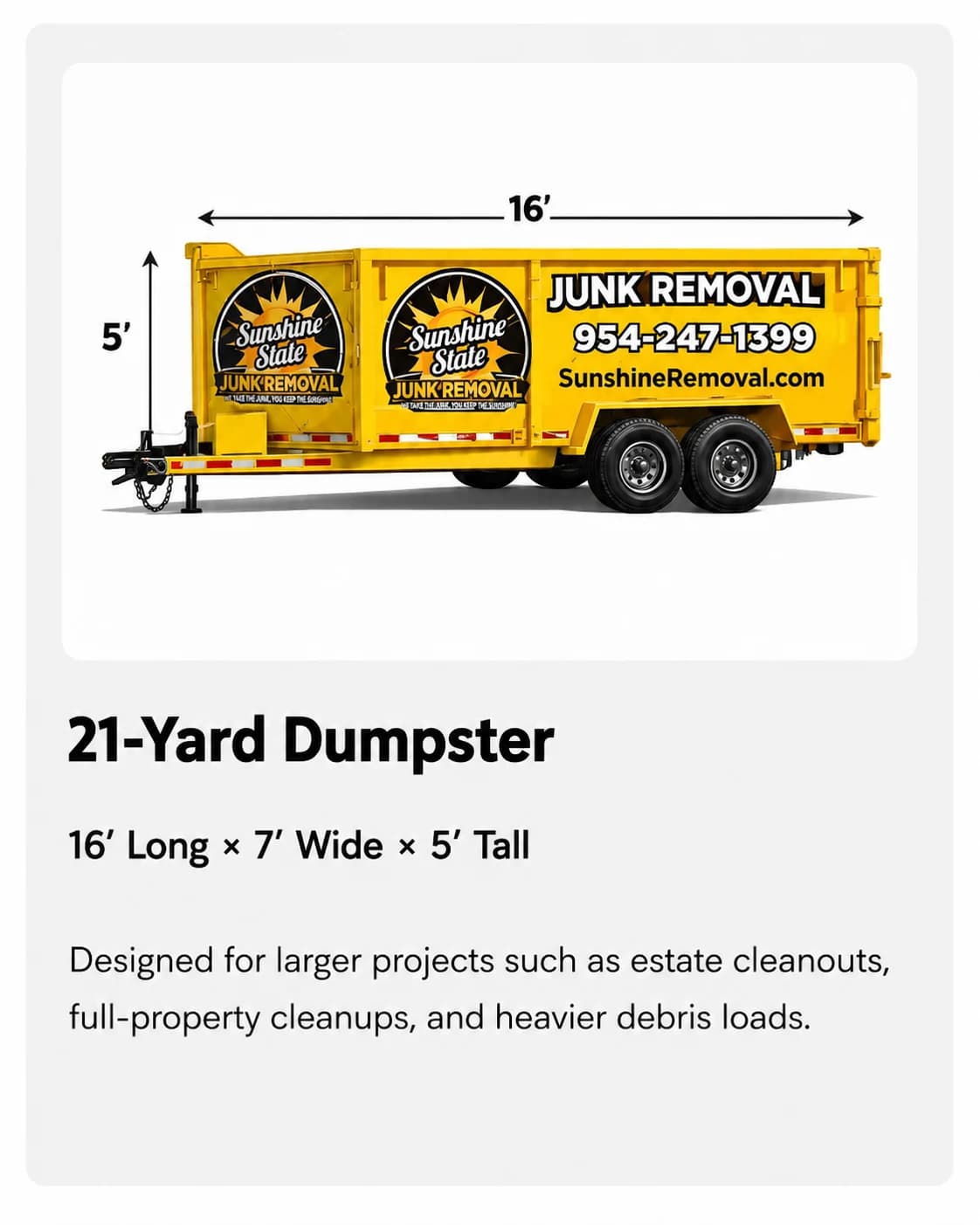
Interior debris like drywall, cabinets and flooring is bulky but mostly moderate in weight, so the 18 or 21 yard trailer fits one to a few rooms. Tile and plaster add weight quickly; each rental includes 1 ton, and weight over that is $120 per ton.

Real jobs

Related real jobs

From our Google Business Profile posts. Each card says exactly what our part of the job was.

Yellow dump trailer loaded with tarped cardboard boxes outside a three-story building

Post-construction cleanup

Post-construction cleanup at a medical center in Pompano Beach

August 9, 2026 · Pompano Beach

We cleared post-construction debris at a medical center for a contractor.

Our part: Cleared and hauled away the post-construction debris.

Read about this job →
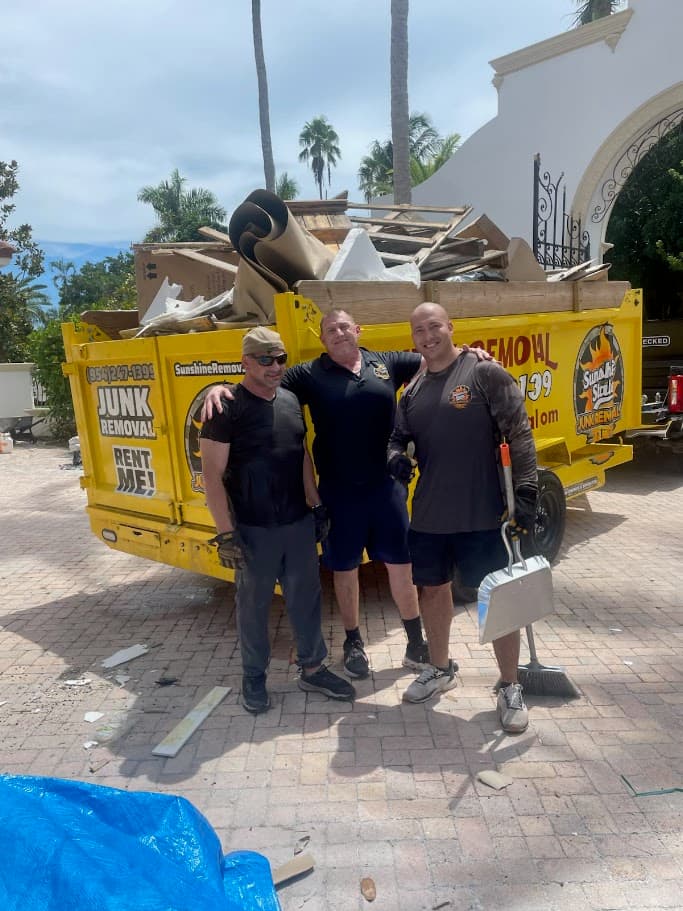
Three men with a broom and dustpan in front of a yellow dump trailer loaded with construction debris

Construction debris removal

Weekly construction cleanup at a mansion remodel in Boca Raton

September 4, 2026 · Boca Raton

We have handled weekly junk removal and construction cleanup at a mansion remodel for over a year. That week we removed 25+ yards of concrete, tile, boxes, paper and pallets.

Our part: Provides weekly junk removal and construction cleanup; that week removed 25+ yards of concrete, tile, boxes, paper and pallets.

Read about this job →
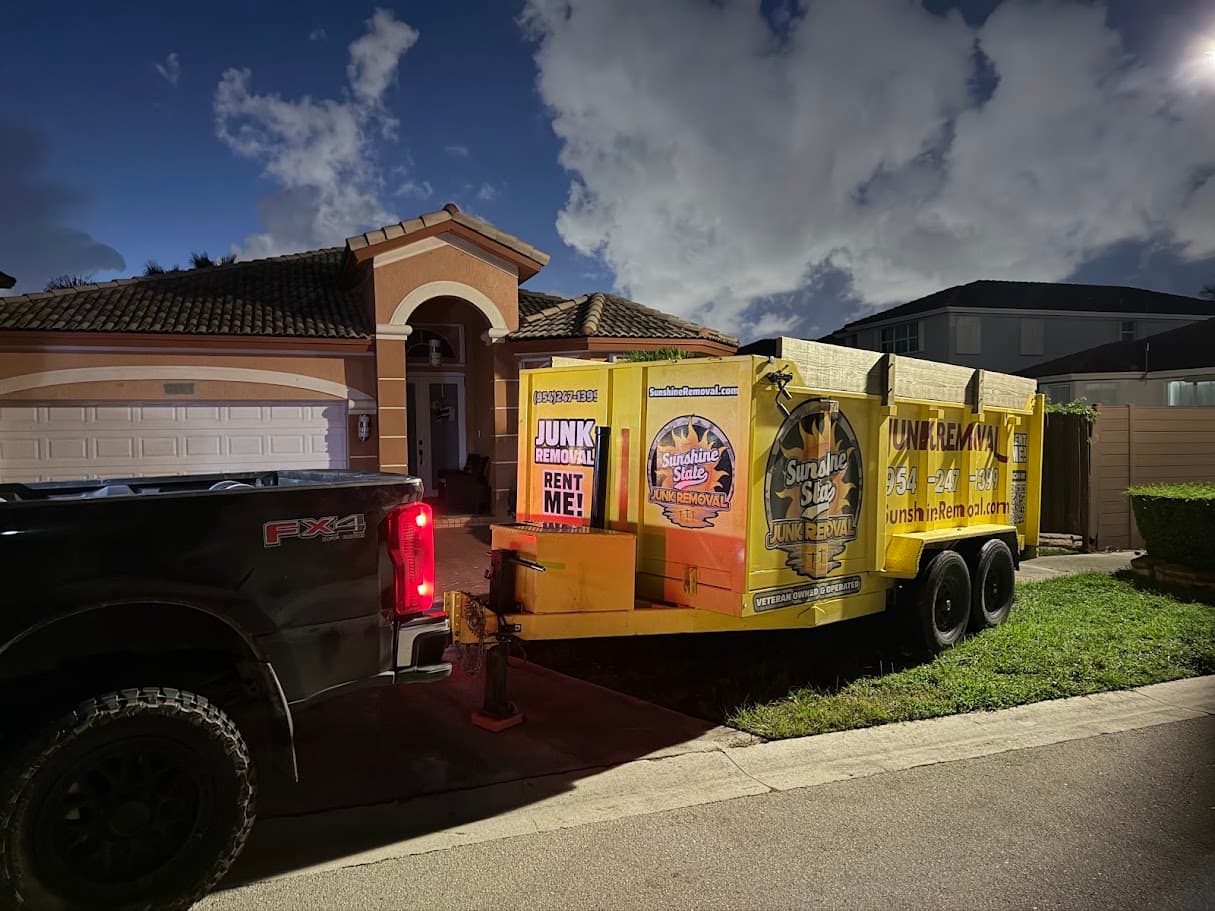
Yellow dump trailer hitched to a black pickup in front of a tile-roof home before sunrise

18-yard trailer for pool deck demo

18-yard trailer for a pool deck demo in Weston

August 30, 2026 · Weston

We dropped off an 18-yard trailer early in the morning for a pool company's pool deck demo. The load was kept as clean fill (concrete and dirt) and recycled, saving the customer disposal fees.

Our part: Supplied an 18-yard dump trailer and kept the load as clean fill for recycling; the pool company did the demolition.

Read about this job →

FAQ

Interior Demolition questions

What is interior demolition?

Interior demolition is removing parts of a building's inside, like drywall, flooring, cabinets and fixtures, while leaving the structure and anything you're keeping in place. It's usually the first step of a remodel.

Do you haul away the debris from interior demolition?

Yes. Loading the debris, hauling it to approved disposal and recycling facilities, and sweeping up the space are included in the job.

Do I need a permit for interior demolition?

It depends on your city and the scope of the work, so check with your city's building department before work starts. Getting any required permit is the property owner's or their contractor's responsibility.

Who shuts off the utilities before interior demolition?

You do, through the appropriate party: your utility provider, plumber or electrician. Water, electric and gas to the work area need to be shut off and disconnected before demolition starts.

Can I do the demolition myself and just rent a dumpster?

Yes. If you'd rather do the tear-out yourself, a dump trailer rental includes 7 days and 1 ton. The 18 yard ($395) or 21 yard ($440) fits most room-by-room remodels.

Ready when you are

Get a quote for interior demolition

Text a few photos of the area, or book a walkthrough. We'll confirm scope, timing and the trailer size before anything starts.

Call now Text a photo